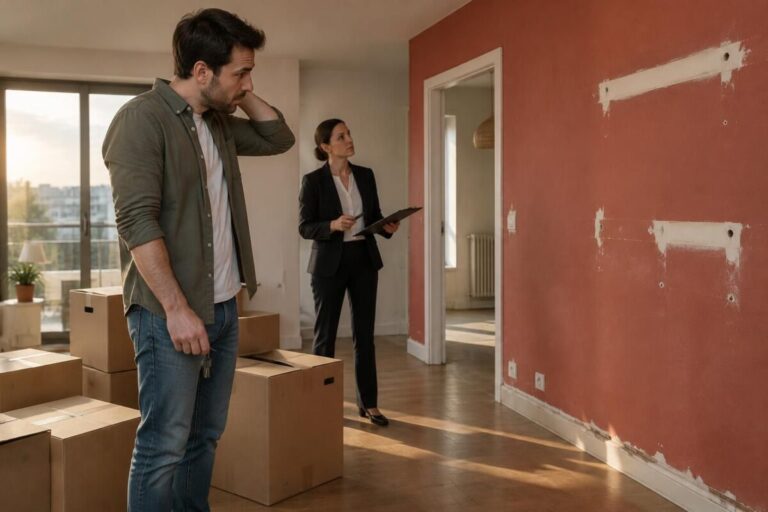
Real estate taxation: who deducts what after work on a rental property
Hi everyone, it’s Zoé. After work is carried out on a rented property, the deduction depends mainly on the tax regime and the nature of the expenses: repairs, improvements or structural work. Under the actual-expense regime, certain costs reduce taxable income, but construction work is generally not deductible from rental income. In my article, I’ll give you the pointers you need to file correctly and protect the profitability of your rental property.
In practice:
- Check whether you rent the property unfurnished or furnished, then identify your tax regime.
- Classify each expense: maintenance, improvement or construction.
- Gather detailed invoices and proof of payment.
- For an unfurnished rental, compare your actual expenses with the micro-foncier allowance.
- Report expenses in the correct category and keep your supporting documents.
Property tax: deductible work depending on the regime you choose
The actual-expense regime allows the landlord to deduct certain expenses actually incurred for the rented property. By contrast, under a micro regime, a flat-rate allowance applies: you cannot add your work invoices to reduce taxable income further.
If you rent a property unfurnished, the rent is treated as property income; under the actual-expense regime, eligible expenses are generally reported on the relevant tax return, often form 2044. When you rent a furnished property under the actual-expense regime, the income is treated as BIC (business and professional income): repairs may be recorded as expenses, while certain assets or long-lasting work are instead capitalized and then depreciated.
For an unfurnished rental under the micro-foncier regime, the flat-rate allowance is generally 30% if you meet the regime’s conditions. The eligibility threshold is generally €15,000 in annual income; check the rules that apply to your situation before choosing. The best approach is to compare the allowance with the total of your actually deductible expenses, without forgetting other costs related to the property.
Actual-expense or micro regime: the comparison that changes the calculation
Let’s imagine that Léa receives €10,000 in rent from an unfurnished rental and incurs €5,000 in deductible expenses. Under the micro-foncier regime, the 30% allowance amounts to €3,000; under the actual-expense regime, her actual expenses may therefore be more advantageous, provided they are substantiated and accepted.
| Situation | Usual tax treatment | Point to watch |
|---|---|---|
| Unfurnished rental under the actual-expense regime | Expenses deductible from property income depending on their nature | Construction and extension work are excluded from ordinary deductions |
| Unfurnished rental under the micro-foncier regime | Flat-rate allowance | Work invoices cannot be deducted separately |
| Furnished rental under the actual-expense regime | Eligible expenses and depreciation under the BIC rules | A long-lasting expense may need to be capitalized |
| Furnished rental under the micro-BIC regime | Flat-rate allowance | Expenses incurred cannot be deducted on an actual-expense basis |
The actual-expense regime is therefore not automatically the most advantageous: it requires more thorough bookkeeping and careful classification of expenses. To avoid mistakes that reduce your tax benefit, you can also read about these rental renovation mistakes that jeopardize a deduction.
Maintenance, improvement or construction work: how to tell them apart
Maintenance and repair work helps keep the property in good condition or restore an existing fixture or fitting to working order. Under the actual-expense regime, these costs are often deductible for unfurnished rentals and may be recorded as expenses for furnished rentals, depending on the applicable rules.
Painting, repairing a leak, replacing a faulty hot-water tank or restoring a roof are common examples. However, labor you carry out yourself is not a billed expense: only purchased materials, supported by documentation, may potentially be taken into account.
Improving the property without confusing it with a renovation
Improvement work adds a new fixture or provides additional comfort without changing the building’s structure. For unfurnished rentals, some expenses of this kind may be deductible, subject to the tax requirements; for furnished rentals under the actual-expense regime, they may need to be capitalized and depreciated rather than treated as an immediate expense.
Installing double glazing or a ventilation system may fall into this category, depending on the project. Construction, reconstruction or extension work is different: it increases the floor area or substantially transforms the property and is generally not deductible from property income as an ordinary expense. For furnished rentals under the actual-expense regime, however, the accounting treatment may allow depreciation under the BIC rules.
If an expense restores an existing fixture or fitting, it is often considered a repair; if it creates a room or enlarges the property, it is more likely to be considered construction work. To explore this distinction further, see the detailed criteria for rental property improvements.
Deductible expenses: fees, taxes and interest not to forget
Work is only one part of deductible expenses. Under the actual-expense regime, property management fees, certain accounting fees, insurance related to the property, loan interest and various financing costs may also be taken into account, provided they relate directly to the rental and comply with the rules of the regime.
Property tax is generally deductible for a rented property, but the waste collection tax recovered from the tenant is not an expense borne by the landlord. Condominium fees also need to be reviewed: an adjustment may be necessary to separate recoverable amounts or non-deductible expenses.
Please note: repayment of the principal on a mortgage is not deductible. Only interest and certain loan-related fees may be deductible, provided they are connected to the rental property.
Rental property loss: a tax tool to use carefully
For an unfurnished rental under the actual-expense regime, a rental property loss may arise when deductible expenses exceed rental income. Subject to certain conditions, the portion resulting from expenses other than loan interest may be offset against total income up to an annual limit generally set at €10,700; any excess and the portion related to interest are subject to separate carryforward rules.
The result is not a tax reduction equal to the cost of the work: a deduction reduces the taxable base, and its effect depends in particular on your tax situation. Estimating the figures before starting work helps you compare the net cost of the work with the expected rental return.
Reporting work on a rental property: a simple three-step plan
Step 1: classify. Note the nature of each expense and check which regime applies. For work carried out before the property is first rented, keep evidence showing that it was genuinely intended for rental: listings, a management agreement, a lease or correspondence with prospective tenants.
Step 2: substantiate. Keep detailed invoices, contracts, payment statements and documents from the property manager. A vague invoice or an expense with no clear connection to the rental may be challenged; it is best to ask the contractor to describe the work performed precisely.
Step 3: report. As a general rule, expenses are taken into account in the year they are paid, not simply the year the work begins. Report them using the appropriate regime and form, then keep your records in case the tax authorities request them.
A simple principle: a deductible expense must be real, substantiated and related to the rental. If you are unsure about an invoice before paying it, check its tax treatment rather than relying on a later adjustment.
For example, Marc pays an invoice in December for roof repairs on his unfurnished rental apartment. He keeps the invoice and proof of the bank transfer: these documents clearly link the expense to his property and to the year of payment.
Useful work does not automatically qualify for a deduction. Planning the financing and timing in advance can also affect the return, as explained in this article about financing rental property work at the right time.
Frequently asked questions about deductible rental property work
Can you deduct work expenses under a micro regime?
Generally, no. The micro-foncier and micro-BIC regimes apply a flat-rate allowance; work invoices are not deducted separately.
Is work carried out before renting the property deductible?
It may be deductible under the actual-expense regime if the property is genuinely intended for rental and you can prove it, for example with listings, a management agreement or a lease, as well as invoices and proof of payment.
Is the construction of an extension deductible from property income?
Generally, no: an extension or enlargement is a construction expense, not an ordinary expense deductible from property income. For a furnished rental under the actual-expense regime, depreciation may apply under the accounting rules.
Can you deduct the time you spend doing the work yourself?
No. Your own labor is not a billed expense. Purchased materials may potentially be taken into account if they are eligible and supported by documentation.
Before starting work, check three things: the tax regime, the category of work and the supporting documents available. This preparation turns an expense into a clearer investment decision, without confusing tax savings with actual profitability.
Thank you for reading; Warm regards; Zoé