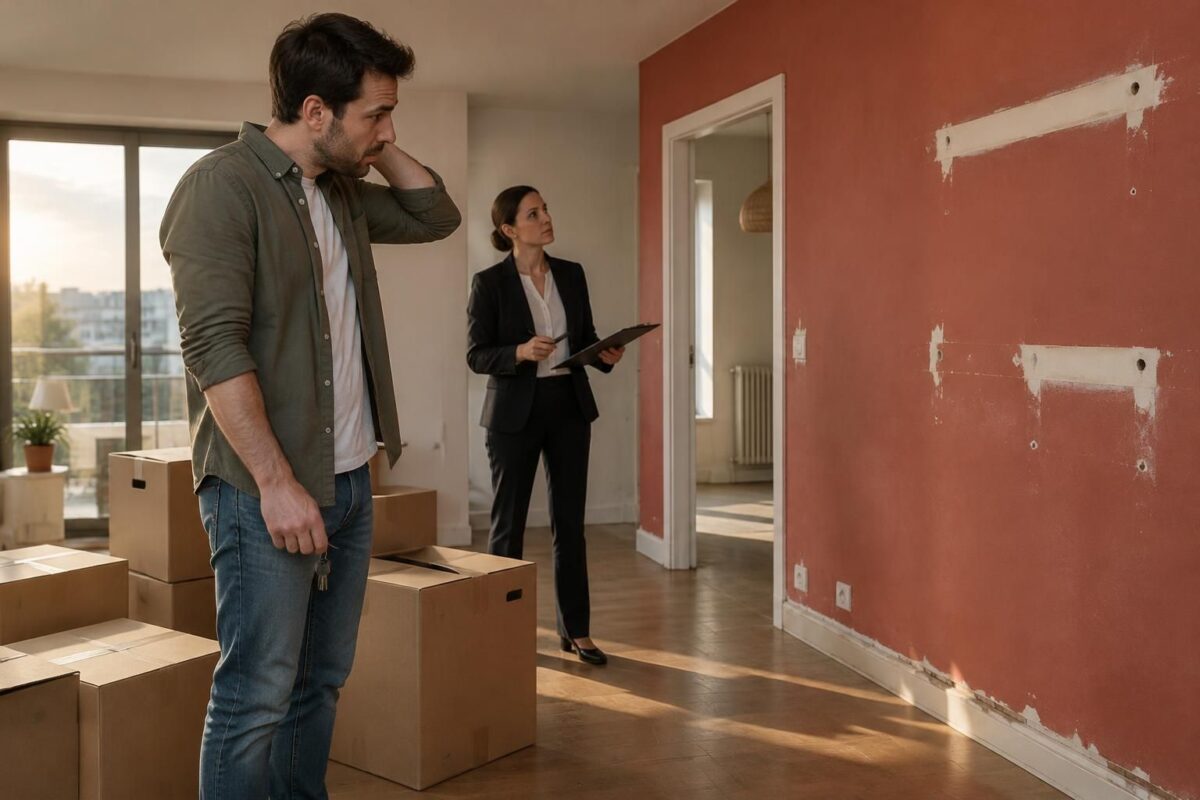
Rental renovations: without authorization, the consequences can be costly
Hi everyone, it’s Zoé. Without the landlord’s written consent, major work can cost you dearly when you move out: reinstatement, compensation, or lease termination proceedings. Small decorative changes are not treated as alterations to the property, but the line depends on what you change. The rule to keep in mind: no major work without written permission.
In practice:
- Describe the work, materials, and contractors in a written request to the landlord.
- Wait for written consent before starting: an oral exchange is difficult to prove.
- Specify who pays, who carries out the work, and what will need to be done when you move out.
- Keep emails, estimates, invoices, photos, and any contractors’ warranties.
- Compare the move-in and move-out inspection reports, taking normal wear and tear into account.
Work in a rental property: what work requires the landlord’s permission?
The law of July 6, 1989 distinguishes ordinary improvements from alterations to the property. Repainting a room in a reasonable shade generally counts as decorating; removing a partition, modifying a fixed installation, or renovating a bathroom changes the property more substantially and, in practice, requires the landlord’s written consent.
There is no general two-month deadline that applies to every request for work. To avoid misunderstandings, ask for a written response and do not start the work until the terms are clear. An oral agreement can lead to conflicting accounts: why a verbal agreement offers little protection.
If you put up shelves or freshen up the walls without permanently changing the property, the risk is often limited, provided you return the premises in good condition. If you alter the plumbing or layout, written permission becomes essential to establish responsibilities and determine what happens to the work.
Work done without permission: the risks when moving out
Unauthorized work may lead the landlord to demand that you restore the property at the tenant’s expense. Depending on the extent of the alterations, the landlord may also claim compensation if they can prove they suffered a loss, such as necessary repairs or difficulty finding a new tenant.
Lease termination is not automatic: the landlord may apply to a judge, and the decision depends on the facts, the lease, and the seriousness of the breach. The security deposit cannot be withheld without justification; any amounts claimed must correspond to proven damage and reasonable costs.
| Situation observed | Possible consequence | Useful step |
|---|---|---|
| Painting or minor improvements | Restoration may be requested if the result is damaged or highly unusual | Ask for consent if you are unsure about the nature of the work |
| Modification to a fixture or the layout | Restoration at the tenant’s expense or a claim for compensation, depending on the loss | Get detailed written consent before starting the work |
| Damage found when moving out | Reasonable, documented costs may be claimed, beyond normal wear and tear | Compare the inspection reports and keep the evidence |
A tenant who replaces a bathtub with a shower without permission may have to pay to restore the original installation if the landlord never approved the work. To better understand what is at stake with bathroom work, read this piece on a renovated bathroom in a rental property.
Property inspection reports and damage
The move-in inspection report serves as a reference for comparing the condition of the property when you leave. Dated photos, invoices, and written exchanges help distinguish actual damage from normal wear and tear caused by occupancy.
Numerous or large holes, a damaged floor, deteriorated bathroom fixtures, or a broken window may justify a request for repairs. Conversely, the landlord cannot automatically charge the tenant for the normal aging of fixtures; each situation is assessed based on the available evidence.
Permission, the landlord’s obligations, and compensation
The landlord must respond clearly to a sufficiently detailed request and meet their own obligations, including those relating to providing and maintaining the property. The tenant, for their part, must take care of the premises and carry out the tenant’s maintenance repairs, except for issues due to wear and tear and repairs that are the landlord’s responsibility.
An authorized improvement does not automatically entitle you to compensation when you move out. If you expect to receive compensation, get its basis, amount or calculation method, and the treatment of fixtures at the end of the lease specified in writing. The criteria may include the cost, age, and actual added value to the property.
For a property investor, well-managed work can make the property more attractive; for a tenant, it can make everyday life more convenient. But without an agreement on costs and what happens to the installations, the hoped-for increase in value can turn into a dispute: assessing the impact of a tenant’s improvements on a property’s value.
A simple three-step approach
- Describe: list the planned changes, attach an estimate, and specify the materials or fixtures involved.
- Get consent: ask for a written response specifying the permissions, responsibilities, and any required restoration.
- Document: photograph the property before and after, keep the invoices, and have the work inspected at the end if necessary.
A simple principle: “What is agreed in writing can prevent many disputes when it’s time to hand back the keys.” If a disagreement arises, start with a documented exchange, then consider mediation or the departmental conciliation commission; legal action remains possible if no agreement is reached.
Frequently asked questions about unauthorized work in a rental property
Can I repaint my home without asking the landlord’s permission?
A standard paint job is generally considered a decorative improvement. However, a very bold color or a finish that is difficult to remove may lead to a request to restore the property: check your lease and ask for written consent if in doubt.
Can the landlord terminate the lease because of unauthorized work?
The landlord may seek a court-ordered termination if the work constitutes a sufficiently serious breach, but termination is not automatic. The decision depends on the circumstances and may be left to a judge.
Can the landlord keep the entire security deposit?
No, deductions must be justified, particularly by damage assessed against the move-in inspection report and by reasonable costs. Normal wear and tear must not be charged to the tenant.
Can I be reimbursed for work that improves the property?
Not automatically. It is best to negotiate written consent before the work begins, specifying whether compensation is provided and how it will be calculated.
Thanks for reading; Warm regards; Zoé